Silent Killer or Healing Space?
The Modern Kitchen: Where Taste, Nutrition, and Science Come Together to Build Health
In today’s world, diseases such as diabetes, obesity, hormonal disorders, weakened immunity, and chronic inflammation are increasing at an alarming rate. What is surprising is that this is happening at a time when “healthy food” trends and diet awareness are more popular than ever before. One of the biggest reasons is that we have reduced the kitchen to a place focused only on taste and fullness, while in reality, the kitchen is one of the most powerful foundations of human health, energy, and overall quality of life.
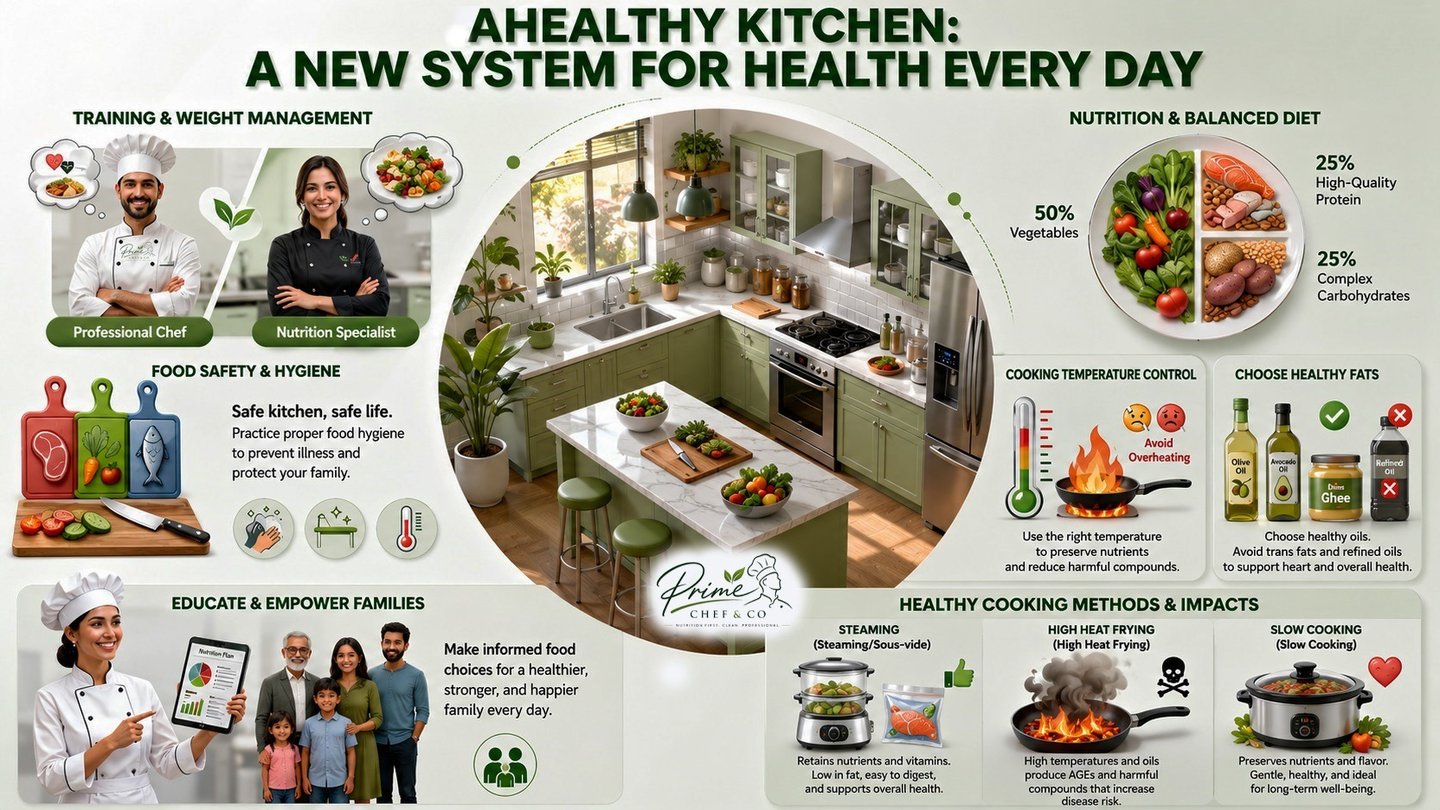
A modern scientific kitchen is not just a place where meals are prepared. It functions as a “daily health system,” where every detail, including hygiene, cooking temperature, oil selection, food preparation methods, and nutritional balance, directly impacts human health.
The Connection Between the Kitchen and Health
Professional kitchens place great importance on hygiene because even small mistakes can lead to serious health risks. Safe and hygienic food preparation is especially important for children, elderly individuals, and people with weakened immune systems. A trained chef or food handler does not simply prepare meals; they work with an understanding of food safety, nutrition, and health-conscious cooking practices.
Heat: A Benefit and a Risk
The correct use of heat is one of the most important aspects of cooking. Excessive burning or cooking at extremely high temperatures can produce harmful compounds that contribute to inflammation and other health problems. On the other hand, proper cooking methods can improve the absorption of important nutrients, such as lycopene in tomatoes and beta-carotene in carrots.
This is why a skilled chef must understand not only flavor, but also nutrition preservation and safe cooking techniques.
Why Choosing the Right Oils Matters
The fats used in our daily meals play an essential role in hormonal balance, brain function, and cellular health. Highly refined and heavily processed oils may increase oxidation and inflammation in the body, while healthier options such as extra virgin olive oil, avocado oil, and pure ghee are considered more stable and beneficial when used appropriately.
The Real Meaning of a Healthy Plate
Healthy eating does not mean starving yourself or eating less. It means consuming balanced, nutrient-dense meals. A well-designed plate should include adequate protein, fiber, vegetables, and low-glycemic carbohydrates to help maintain stable energy levels, balanced blood sugar, and a healthy metabolism.
The Future Chef: More Than Just a Cook
In the future, the role of chefs will go far beyond preparing delicious meals. A modern chef must understand nutrition, food safety, hygiene, and healthy cooking methods. When nutrition experts and professionally trained chefs work together, food becomes more than just a meal. It becomes a tool for recovery, wellness, immunity, and long-term health.
Doctors Diagnose
Nutritionists Plan
Chefs Execute
This “Health Triangle” has the potential to become the foundation of a healthier future society.
Conclusion
If we truly want to reduce lifestyle diseases, the transformation must begin not in hospitals, but in our kitchens. A scientific, hygienic, and nutrition-focused kitchen can help reduce disease risks while improving the health of future generations.
In the end, the real question is simple:
Is your kitchen protecting your health,