Culinary Medicine: When the Kitchen Becomes Part of Healthcare
Bridging Medical Science, Nutrition, and Professional Cooking
For decades, healthcare systems around the world focused mainly on medicines and treatments, while food was often considered secondary. Hospital meals were commonly associated with bland taste, poor presentation, and low nutritional value. However, modern research and evolving healthcare practices are changing this perception completely. Today, a new movement known as Culinary Medicine is transforming the role of food from simple nourishment into a powerful tool for healing, recovery, and long-term wellness.
Culinary Medicine is based on the understanding that food is not merely calories or taste. Every meal carries biological information that directly affects the body’s energy, immunity, hormones, metabolism, and overall health. Scientific evidence now shows that proper nutrition can play a major role in preventing chronic diseases, supporting medical treatments, improving recovery, and enhancing quality of life.
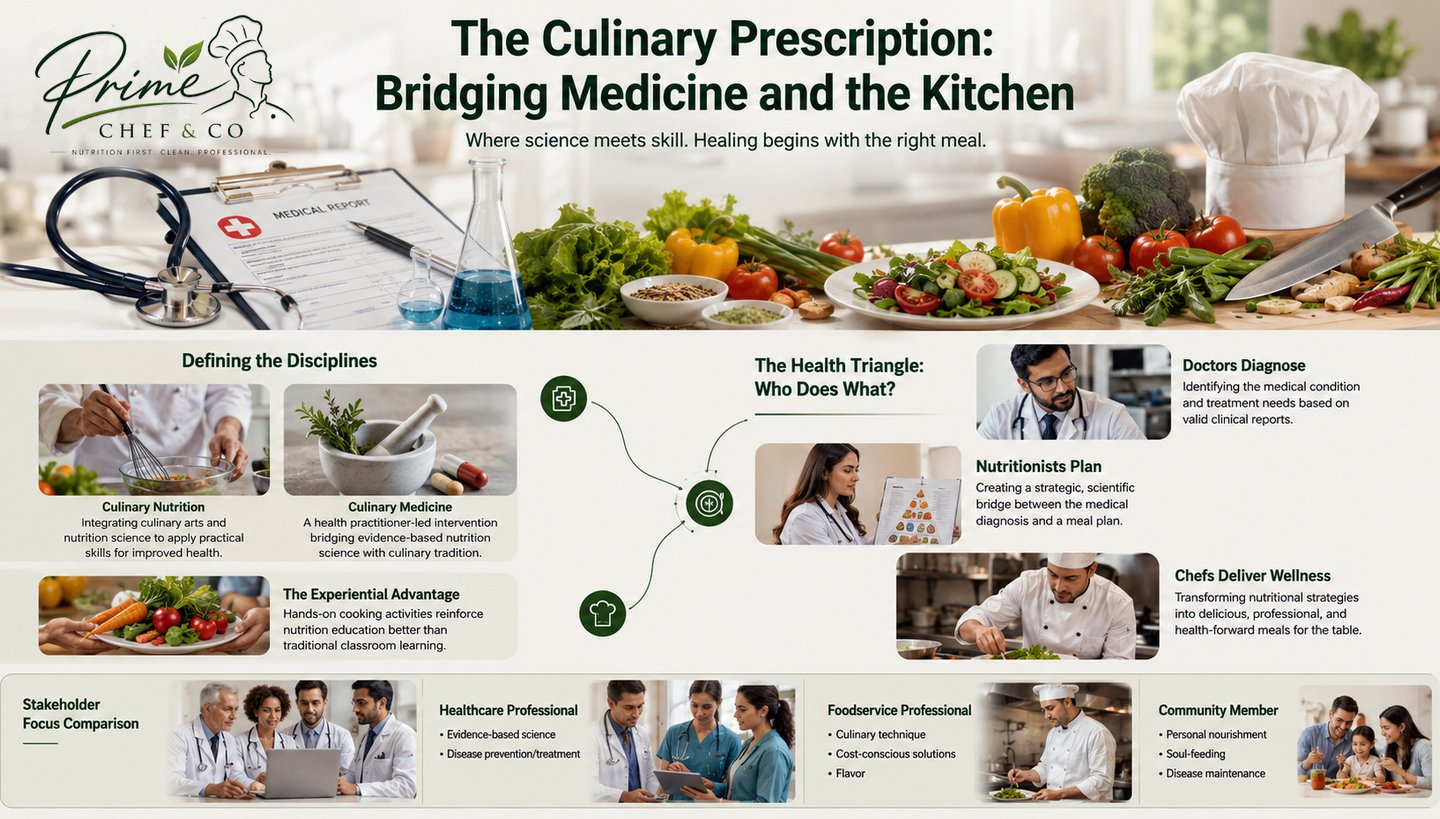
At the heart of this approach is a collaborative healthcare model where doctors, nutritionists, and professional chefs work together as one coordinated system.
Doctor Diagnoses → Nutritionist Designs → Chef Prepares
This “Health Triangle” creates a bridge between medical science and the kitchen. The doctor begins by analyzing the patient’s condition, medical reports, and clinical needs. Based on this medical understanding, the nutritionist develops a personalized dietary strategy designed to support recovery, strengthen immunity, improve energy levels, and address the patient’s specific nutritional requirements. Finally, the professional chef transforms this scientific nutritional plan into meals that are hygienic, flavorful, practical, and easy to consume while preserving maximum nutritional value through proper cooking techniques.
This model represents a major shift from traditional food preparation. In most households and institutions, food is still prepared mainly for taste and convenience, often without understanding the nutritional impact of ingredients, cooking methods, portion balance, or food hygiene. As a result, people may eat regularly but still suffer from fatigue, nutrient deficiencies, obesity, diabetes, hypertension, digestive disorders, and other lifestyle-related diseases.
Culinary Medicine challenges this outdated system by introducing nutrition-focused kitchens where health becomes the first priority without sacrificing flavor or enjoyment. It recognizes that cooking methods themselves play a critical role in preserving nutrients. Techniques such as steaming, simmering, controlled heat cooking, and balanced ingredient combinations help maintain vitamins, minerals, antioxidants, and protein quality that are often destroyed through excessive frying, overheating, or poor food handling.
Another important aspect of Culinary Medicine is personalized nutrition. Modern science has proven that every individual responds differently to food based on genetics, age, lifestyle, activity level, metabolism, medical condition, and even hormonal balance. A meal suitable for a diabetic patient may not be appropriate for an athlete, a child, or an elderly individual. Therefore, “one diet for everyone” is no longer considered an effective approach.
This growing field is also reshaping medical education itself. Around the world, healthcare institutions are now introducing “Teaching Kitchens” and practical culinary training programs for doctors and healthcare professionals. The goal is to help medical practitioners understand not only diseases and medications, but also the science of food preparation and its direct influence on recovery and preventive healthcare.
At Prime Chef & Co, we believe that true wellness begins in the kitchen. Our mission is to create a professional system where medical understanding, nutritional science, hygiene standards, and culinary expertise work together to support healthier living. Through trained chefs, structured kitchen systems, personalized nutrition plans, and continuous professional training, we aim to transform food from a daily routine into a meaningful health-support system.
Because in the future of healthcare, food will not simply accompany treatment — it will become part of the treatment itself.